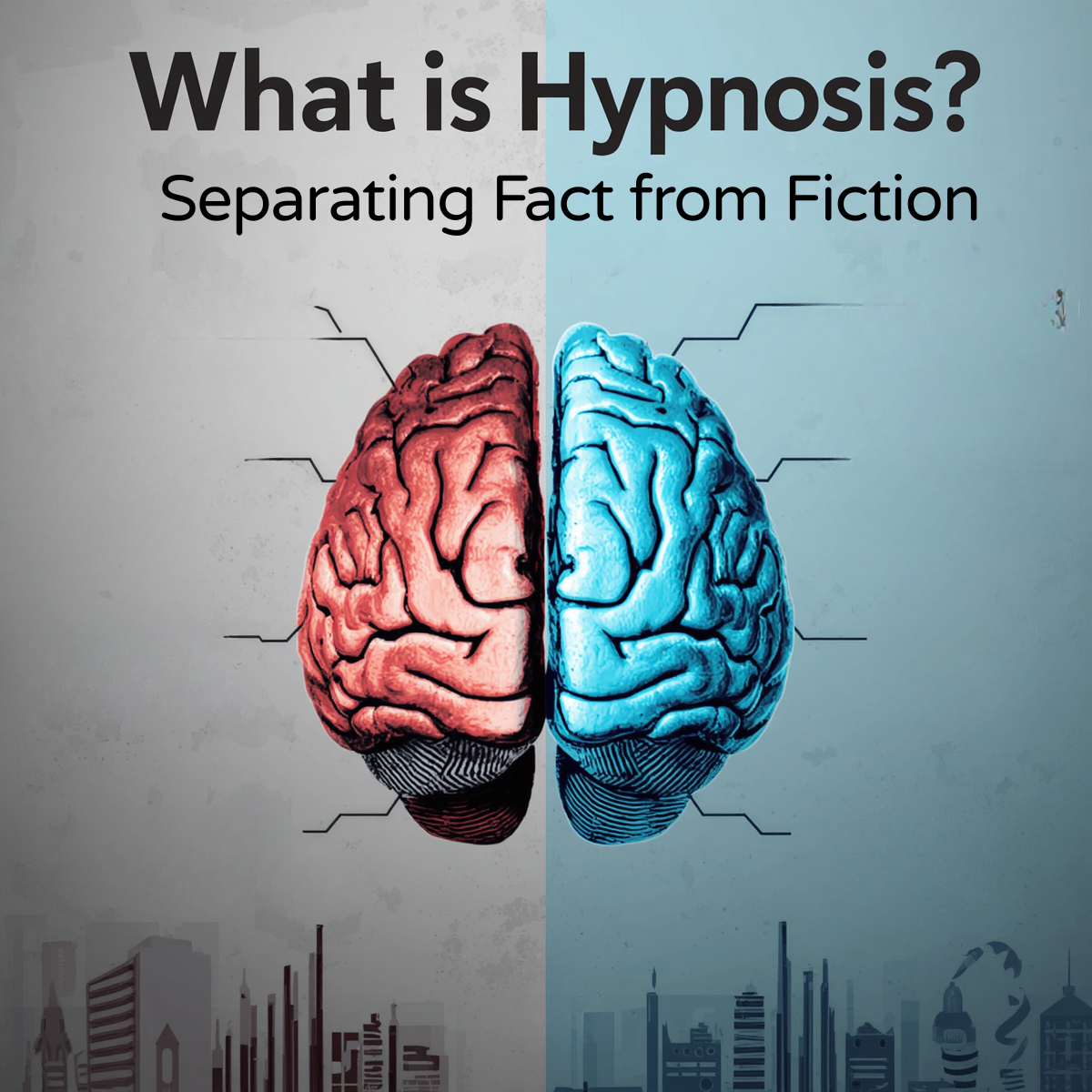
When most people think of hypnosis, they picture a swinging pocket watch or a mysterious figure making someone cluck like a chicken against their will. These images - born from stage shows and Hollywood movies - have almost nothing to do with real, clinical hypnotherapy.
So What Is Hypnosis, Really?
Hypnosis is a natural state of focused awareness and heightened suggestibility - one you have already experienced many times. Have you ever driven home on autopilot and arrived without remembering the journey? Become so absorbed in a book that the world disappeared? Those were all naturally occurring hypnotic states.
In a clinical context, a hypnotherapist guides you into a deliberately deepened version of this state - where the critical, analytical part of your mind relaxes and the subconscious becomes receptive to positive, targeted suggestion. This is where the real work of change happens.
What the Science Says
The American Medical Association officially recognized hypnosis as a valid therapeutic tool in 1958. Since then, decades of clinical research have confirmed its effectiveness for a wide range of conditions - from anxiety and chronic pain to habit change and phobias. Modern brain scanning technology (fMRI and EEG) has shown that hypnosis produces measurable, reproducible changes in brain activity.
What Hypnosis Is NOT
- Not sleep: You remain awake and fully aware throughout the session.
- Not mind control: You cannot be made to do anything against your values or will.
- Not unconsciousness: You will remember most or all of the session.
- Not permanent: You are in complete control and can come out of hypnosis at any time.
"Hypnosis is not something done to you - it is something unlocked within you. The hypnotherapist is simply a guide helping you access the extraordinary resources of your own subconscious mind."
- Sarah Gewanter, MSSW, CI · Hypnowisdom, Asheville NCReady to Experience It for Yourself?
Book a free, no-obligation consultation with Sarah Gewanter - Asheville NC and worldwide.
📞 828-683-6900 Book Free Consultation